ServicesWater Softener Installation
Water Softener Installation in Glendale
We size a softener to how your household uses water, install it on your plumbing and program it before we leave. The same two or three people who plan your install are the ones who show up to do it, so nothing gets lost between visits.
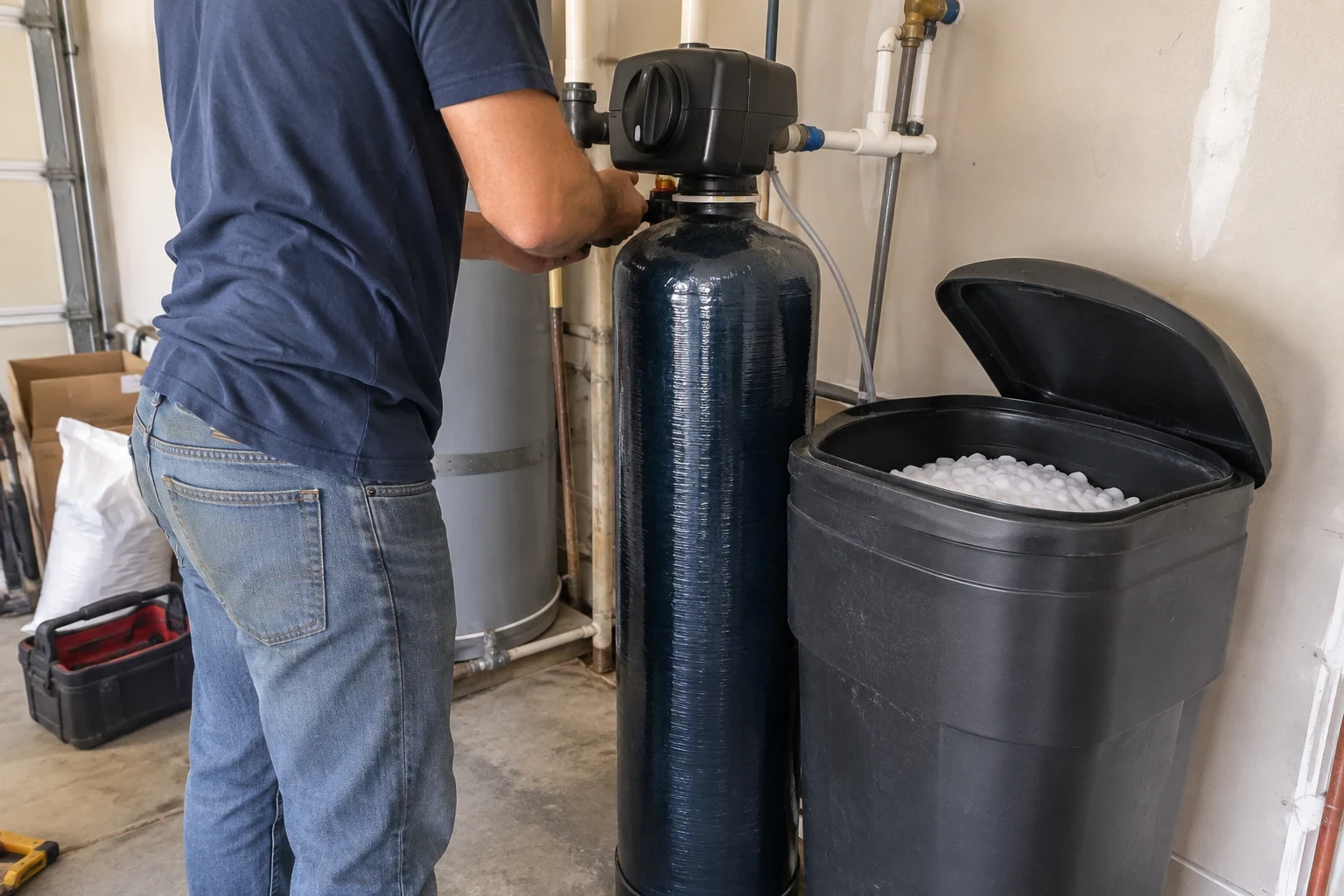
Soft water for your whole home, installed by the people you talked to
Hard water leaves calcium and magnesium behind wherever it heats or dries. That shows up as white crust on faucets, spotty dishes, stiff laundry and scale building up inside your water heater. A softener swaps those minerals out through a resin bed before the water reaches your fixtures, so the buildup stops at the source.
Most of the work is in the details: picking a unit that fits your household, placing it where the drain and power are within reach, and setting the valve so it does not waste salt or water. We keep our crew small on purpose. The person who looks at your garage or utility area is the one who installs and programs the unit, and the one you can call back with questions afterward.
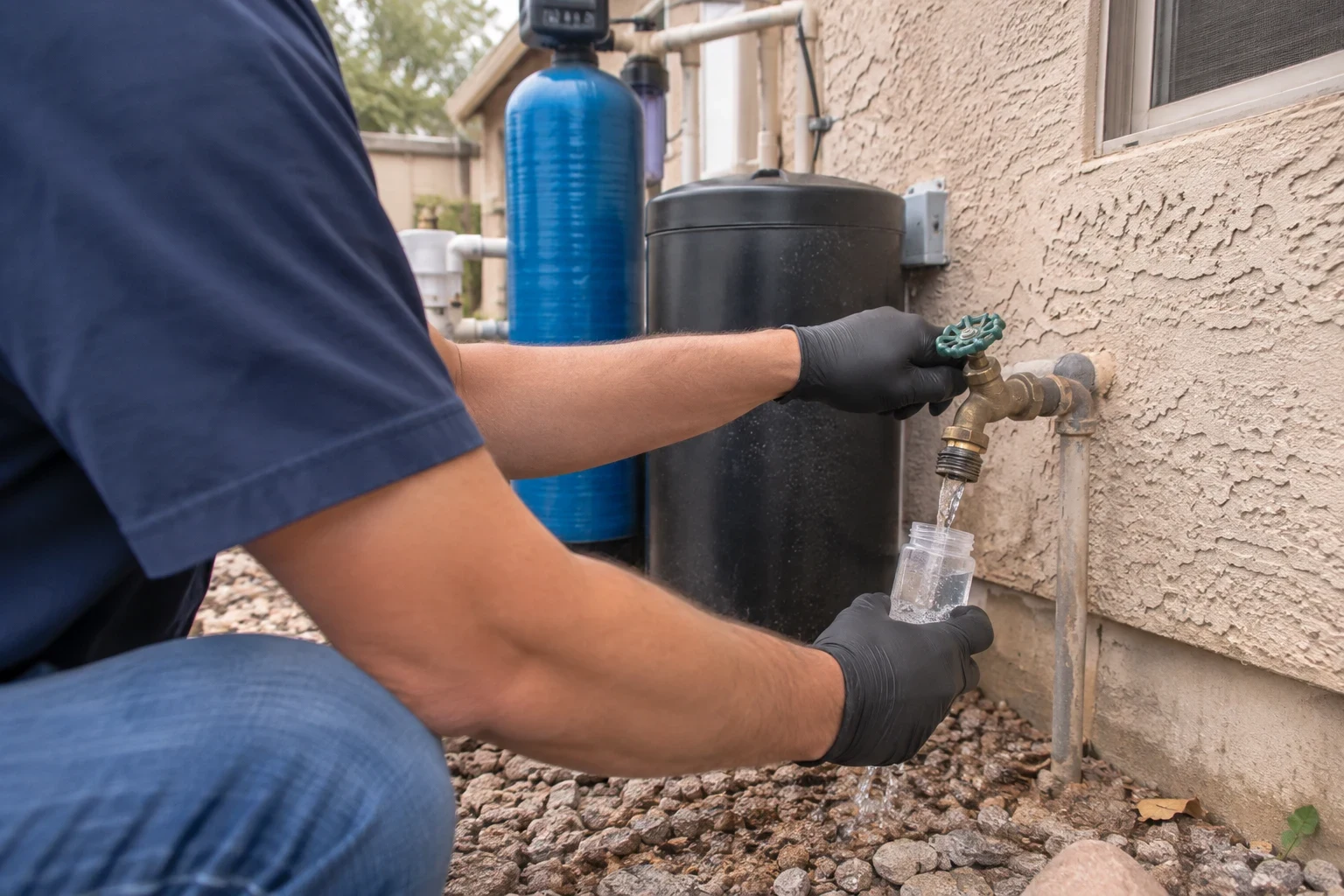
What your installation includes
- 01
Sizing for your household
We find out who is living in your home, the number of bathrooms and your daily habits, like laundry loads and long showers. Those answers set the resin capacity, so the unit is neither cycling all the time nor bigger than you need.
- 02
Connection to your loop or new plumbing
Many West Valley homes came with a softener loop already roughed in at the garage. If yours has one, we tie into it. If it does not, we explain exactly what plumbing is needed to add one before we pick up a tool.
- 03
Bypass, drain and brine lines
A bypass valve goes in so you can take the softener offline while the rest of your home keeps running water. We give the drain line a proper air gap and route the brine line cleanly to the salt tank.
- 04
Programming and a walkthrough
We set the hardness level and regeneration schedule, then show you the display, how to add salt and how the bypass works. You will know what normal looks like.
- 05
Cleanup
Pipe scraps, boxes and any old equipment go out with us. The floor around your new softener is left swept and dry.
Questions about Water Softener Installation?
Call(623) 283-1706Signs a softener would help your home
Chalky buildup on fixtures
The white ring on your faucets and showerheads is mineral scale. Scrub it off and it creeps back within days, because every drop that dries there leaves more behind.
Spotted glasses and a filmy dishwasher
Hard water works against detergent. Spots and a cloudy coating on dishes are among the complaints we hear most often.
Dry skin and dull hair after showering
Soap does not rinse cleanly in hard water, which can leave skin feeling tight and hair feeling coated.
A water heater that pops or crackles
Those sounds usually come from a layer of mineral sediment sitting at the base of the tank, with water boiling up through it. Softened water slows that layer from forming, which helps the heater work less and last longer.
An old softener that has quit
If your current unit stopped using salt, drips at the valve or lets hard water through again, replacing it is often simpler than chasing repairs on worn parts.
How install day goes
- 1
A phone conversation first
You call, and we talk through your household, where the unit would go and whether you have a loop. We give you a clear picture of what the job involves before scheduling.
- 2
Arrival and protecting your space
The same crew you spoke with arrives at the agreed time. We lay down covers, shut off the water and explain what we are about to do.
- 3
Installation and leak check
We set the tanks, connect the plumbing, bypass, drain and brine lines, then turn the water back on slowly and check every joint. A typical install on an existing loop takes a few hours.
- 4
Startup and handoff
We load salt, run the first regeneration, program the valve and walk you through it. You keep the same number to reach the same people later.
What affects the cost of a softener install
We would rather explain the price than surprise you with it. Two things drive most of it: the unit you choose and how much plumbing your home needs to receive it. We walk through each piece with you by phone, so you know what every part of the job covers.
- Unit size and valve type
- A bigger household calls for a larger resin tank. Valves differ too: a demand-based valve tracks the gallons you actually use before it regenerates, while a timer valve runs on a fixed schedule. The metered style is the pricier of the two, but it tends to use less salt and water over the years.
- Existing loop or new plumbing
- Hooking into a loop that is already in place keeps the job simple. Building a new loop, rerouting pipe or adding a drain line means more labor and more materials.
- Location and access
- A garage spot close to a drain and an outlet is the easiest setup. Cramped closets, long drain runs or an outdoor location all add work.
- Removing an old system
- Pulling out and hauling off an old softener takes a bit more time, and more still if the old fittings need fixing before the new unit can go on.
Questions about water softener installation
How much of my day will the install take?
With a softener loop already roughed in, we're usually packed up within a few hours. If your home needs new plumbing to receive the unit, the day runs longer, and we'll tell you that on our first call. Either way, your water is running again before we head out.
Will soft water feel slippery?
Plenty of people notice a smoother feel in the shower at first. What you are feeling is soap rinsing off completely rather than leaving a film behind. Most people stop noticing it after a week or two.
Where does the softener go?
The usual spot is near where your main water line comes into the house, which for a lot of Glendale homes means the garage, sometimes on a loop the builder already plumbed. The unit needs a drain close by for regeneration water and an outlet to power the valve. We look over your setup and suggest the location that fits best.
Do I have to keep buying and hauling salt?
Yes, a softener runs on salt, and most tanks need topping off every month or two depending on how much water you use. If carrying heavy bags is not your idea of a weekend, our automated salt delivery service keeps the tank stocked for you.
Will a softener fix chlorine taste?
No. A softener takes out hardness minerals, not chlorine or off tastes. For that, we often pair it with whole-home filtration, or add a reverse osmosis system at the kitchen sink for drinking and cooking water.
Ready to stop scrubbing scale?
Give us a call and tell us about your home. We will talk through the right size, where it goes and what the job involves, and the same crew will see it through.