ServicesAutomated Salt Delivery
Automated Salt Delivery in Glendale
A water softener only works while it has salt. We set up a refill schedule that fits your home, bring the bags, pour them into the brine tank and check that the salt is dissolving the way it should. You stop hauling heavy bags and stop guessing.
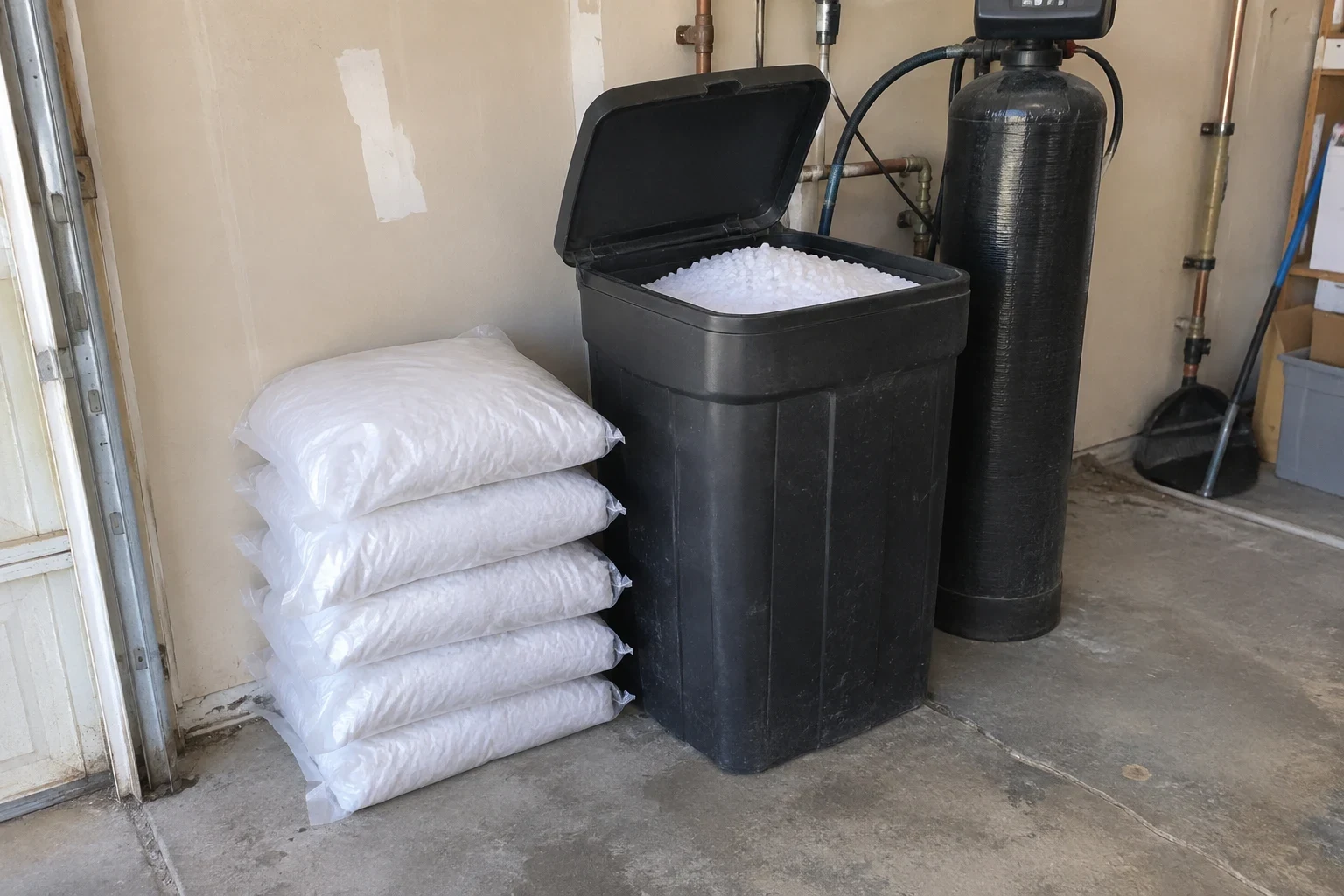
What automated salt delivery covers
Your softener pulls hardness out of the water by trading it for sodium or potassium from the brine tank. When the salt runs low, the softener keeps cycling but stops softening. The first sign is often white spots on the shower glass again, weeks after the tank went empty.
With automated salt delivery, we work out how fast your home goes through salt and come back before it runs out. Household size, how hard your water is and how your softener is set all change that pace, so we look at the system on the first visit instead of guessing.
We are a small crew, and you will usually see the same person each time. That matters more than it sounds. Someone who has looked into your brine tank before notices when the level drops faster than usual or the salt starts clumping.
What happens on each visit
Salt carried in and poured
We bring the salt to your softener, whether it sits in the garage, a utility closet or along the side of the house, and pour it into the brine tank. No bags left on the driveway for you to lift.
Brine tank check
We look for a salt bridge, the hard crust that forms over an empty pocket and fools you into thinking the tank is full. If we find one, we break it up. We also check for mushy salt sludge at the bottom.
Level and usage notes
We note how much salt was left and how much went in. Over a few visits that tells us whether your schedule is right or needs to move.
A quick look at the softener
We glance at the control valve display and the regeneration setting. If something looks off, we tell you what we saw in plain terms. We do not start any extra work without talking to you first.
Cleanup
Empty bags leave with us, and any spilled pellets get swept up before we go.
Signs a salt schedule would help your home
Spots and scale are back
Cloudy glassware, crusty faucet aerators or a stiff feel to towels often mean the brine tank ran dry. The softener was running but had nothing to work with.
You forget until it is empty
Most people only check the tank when something seems wrong. A set schedule takes the remembering off your list.
The bags are hard to manage
Softener salt usually comes in 40-pound bags. If lifting those into a car, then into the garage, then over the lip of a tank is a strain, let us carry them.
The tank looks full but water feels hard
That is a classic salt bridge. The top layer looks fine while the water underneath has no salt touching it.
Salt has turned to mush
Garage heat and humid monsoon weeks can make some salt clump into a sticky layer at the bottom of the tank. A regular check catches it before it blocks the brine line.
How we set it up
- 1
A phone conversation
You tell us about your softener, how many people live in your home and where the unit sits. We talk through salt types and how often visits might need to happen.
- 2
The first visit
We look at the brine tank and the softener settings, fill the tank and set a starting schedule. If the tank needs cleaning or a salt bridge broken up, we handle that first.
- 3
Regular refills
We come back on the schedule we agreed and let you know ahead of time. Ask us about access if your softener is in a locked garage or side yard.
- 4
Adjusting as needed
If guests stay for a month or your household gets smaller, we change the timing. The schedule follows how your home actually uses water.
What affects the cost of salt delivery
Every home goes through salt at its own pace, so there is no single price that fits everyone. We explain the pieces on the phone and keep them clear before the first visit. Here is what moves the number.
- Type of salt
- Standard sodium chloride pellets cost less than potassium chloride, which some people choose to cut sodium in their water. High-purity pellets also leave less residue in the tank than cheaper rock salt.
- How much your home uses
- More people, more laundry and harder water all mean more regenerations and more salt each month.
- How often we visit
- A large brine tank filled less often can work out differently than a small tank that needs frequent top-ups.
- Your softener's settings
- An older timer-based softener regenerates on the clock whether it needs to or not and uses more salt. A demand-based valve tends to use less.
Questions about automated salt delivery
Something not covered here? (623) 283-1706
Do I need to be home when you deliver?
Often you do not. A lot of softeners around Glendale sit in the garage or against an outside wall, so we agree on access with you before the first refill. When the unit is inside the house, we pick a time that works for your schedule.
Which salt should I use, pellets or crystals?
Evaporated salt pellets are our usual suggestion because they dissolve evenly and are less prone to bridging or turning to mush. Some older units do fine with crystals. Potassium chloride is there if you would rather skip added sodium, but it costs more and may call for a change to your softener's settings.
Will you refill a softener another company put in?
Usually, yes. A brine tank takes salt the same way no matter who made the unit or who installed it. We look the system over on our first visit so we know its settings and any quirks before we start a schedule.
What if you find a problem with my softener?
We explain what we noticed and what it probably means, without jargon. Plenty of issues are small, like a regeneration setting that needs a tweak. If the unit is wearing out, we can go over choices on our Water Softener Installation page, and the decision stays entirely yours.
How often will you come?
That depends on how your home uses water. Some households need salt about once a month, while others can go longer between visits. We set a starting interval after the first visit, then fine-tune it once we see how quickly the level drops.
Let us handle the salt from here
Give us a quick picture of your softener and who lives in your home. From that, we will recommend the right salt and a sensible refill pace. The same small crew keeps coming back, so the brine tank stays stocked and your water stays soft.